

The Pool Table Problem
Fear is easy. Community is harder. But it’s worth it.

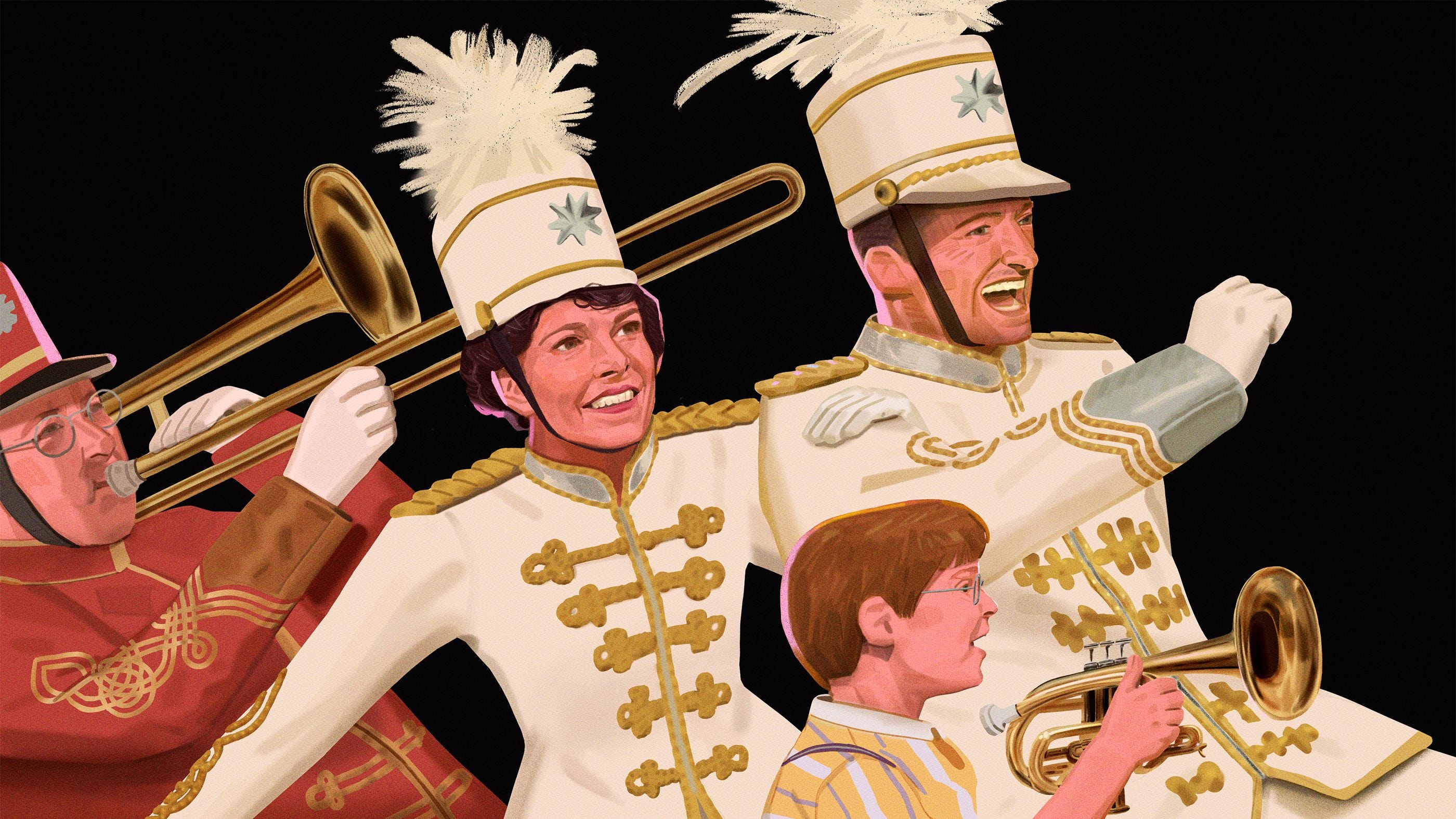
I went to see The Music Man tonight with a couple of my high school friends. It was a draw because our high school performed this musical back in the day. We have a lot of fun memories.
The River City story reminds me of years gone by. But it also reminds me of Iowa today.
In River City, there’s “trouble”: a pool table.
Not because it’s actually destroying the town, but because someone convinces people it will. The fear spreads quickly. Parents worry. Neighbors whisper. Suddenly, something ordinary becomes a threat to everything they value.
And the man at the center of it all knows exactly what he’s doing.
He doesn’t create fear out of nothing. He just redirects it.
The Pool Tables of Today
What are the “pool tables” we are being told to be afraid of now?
Trans people.
LGBTQ+ folks more broadly.
Immigrants.
Anyone who doesn’t fit a certain mold.
We’re told these groups are a danger to children, to culture, to the future. We are told to assume they are criminals or got where they are today by unfair means.
And like River City, the fear starts to feel real because it’s repeated so often.
But if we pause for a moment, we might ask:
Are these actually problems? Or are they only being presented as problems?
The Mechanics of Fear
What The Music Man gets right is this: People don’t need to be bad to be misled. They just need to be worried.
When people are anxious about change, about their kids, about the future, they’re more likely to accept a simple explanation and a clear target.
It’s easier to believe: “That is the problem.”
Than to sit with: “This is complicated, and I’m not sure what to do.”
Fear simplifies things.
And someone always benefits from that simplicity.
Here in Iowa
Living in Iowa, this dynamic feels especially close to home.
We’re hearing a steady drumbeat about what we should be afraid of: what’s happening in our schools, who is “changing” our communities, and which people supposedly threaten our way of life.
Meanwhile, many of the real, everyday concerns Iowans share, like rising costs, cancer rates, water quality, access to healthcare, supporting public schools, and keeping small towns and communities strong, don’t always get the same level of attention.
It’s not that those concerns disappear.
It’s that fear can redirect our focus.
And when that happens, we can end up divided from neighbors we’ve known for years. While the things that actually impact our daily lives go unaddressed.
Why the Ending Works
The surprising thing about The Music Man is that it ends well.
Not because the con was justified, but because something better takes its place.
The town comes together.
The kids gain confidence.
People begin to see each other differently.
The band isn’t perfect. (It’s actually kind of a mess.)
But it’s real. And it belongs to them.
That’s what replaces the fear: not perfection, but connection.
So What’s Our Ending?
We don’t get a neat musical finale.
There’s no moment where everything resolves, and everyone suddenly understands.
But I do think there’s a path forward, and it looks something like this:
People begin to recognize the pattern.
We start to notice when fear is being handed to us.
We get closer to the people we’ve been told to fear.
And it turns out they’re just people.
We choose connection over suspicion.
Curiosity over certainty.
Humility over control.
And slowly, fear loses its grip.
The Band Still Plays
Maybe our version of a “happy ending” isn’t a perfect resolution.
Maybe it’s this:
Communities that keep showing up for each other.
People who refuse to go along with dehumanizing narratives.
Kids who grow up seeing difference as normal, not threatening.
An imperfect, slightly out-of-tune band.
But a band that plays anyway.
The Real Con
The real con isn’t just pointing to a problem.
The real con is convincing people that fear is the only way to stay safe,
that suspicion is the same as wisdom, and that exclusion is the same as protection.
But it isn’t.
And the moment we start to see that, the spell begins to break.
And maybe that’s our ending.
Not a dramatic finale, but a shift:
A shift away from fear.
A shift toward each other.
Maybe the real test of who we are isn’t what we choose to fear, but who we refuse to turn away from.
When fear is manufactured, connection becomes resistance.